
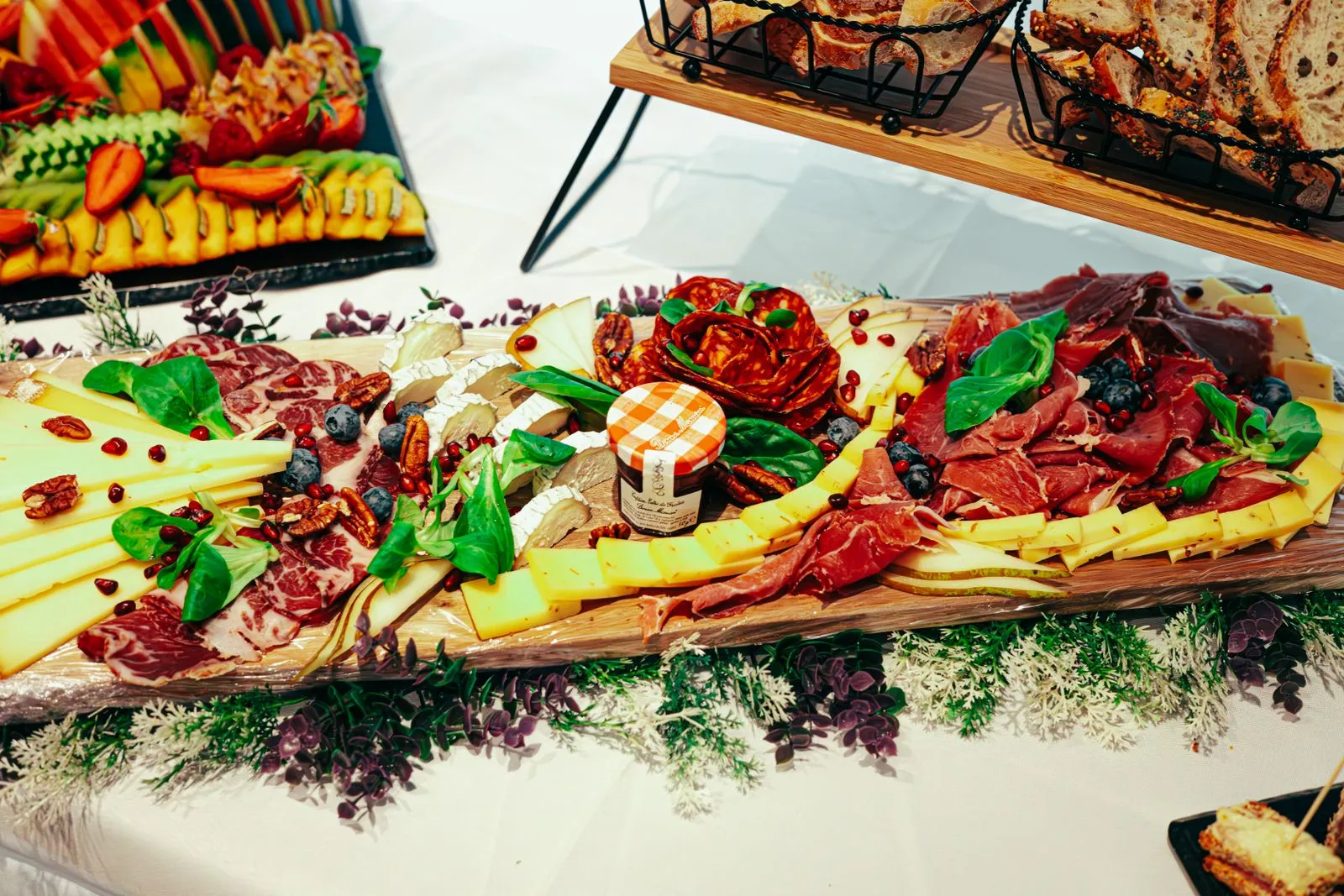
A cheese board for a crowd should look inviting and work smoothly once guests start serving themselves. The key is to estimate portions based on the rest of the menu, choose cheeses with different textures and flavors, and leave enough room for people to reach each item. A little planning also helps you avoid a pileup around one knife or a board that runs out too soon. Use these steps to build a spread that’s generous, varied, and easy to manage.
Plan portions around the menu
First, decide whether the board is an appetizer, part of a larger spread, or the main event. For an appetizer alongside other food, plan roughly 2 to 3 ounces of cheese per person. If cheese and accompaniments will make up much of the meal, plan closer to 4 to 6 ounces per person. Treat these as starting points, then adjust for your guests and the menu.
Buy a little extra when the board is the main food, but don’t fill it with cheese alone. Crackers, bread, fruit, vegetables, nuts, and spreads add variety and help the board feel complete. For a larger gathering, set out a first portion and keep backups chilled. Refill the board as needed instead of putting every item out at once.
Choose contrasting cheeses
Pick three to five cheeses for a medium or large group, with clear differences in texture and flavor. A soft cheese, a firm or aged cheese, and a blue or washed-rind option create a useful range. If you expect many guests, add another familiar choice rather than several cheeses that taste or feel alike.
Consider how easy each cheese is to serve. A wedge of firm cheese can be sliced ahead of time, while a soft cheese needs its own spreader. Keep strong or pungent cheeses separate from delicate ones so their flavors don’t dominate. If you know your guests’ preferences, include one approachable favorite and label less familiar selections.
Add useful accompaniments
Choose accompaniments that bring different flavors and textures. Add crisp crackers or sliced bread, fresh or dried fruit, nuts, and something tangy or sweet, such as pickles, olives, honey, or preserves. You don’t need every category; a few well-chosen options are easier to arrange and replenish.
Check that the accompaniments suit the cheeses and are practical for your guests. Put honey and preserves in small bowls with spoons, and serve olives or pickles with a fork. Keep crackers and bread within easy reach, but place them in their own basket or dish if the board is already full. Offer a separate option for guests who avoid nuts.
Arrange for easy serving
Start with the cheeses, spaced far enough apart that guests can reach each one. Add a separate knife or spreader for every cheese, especially soft and blue varieties. Pre-slice some firm cheese and cut a small opening in the rind of a soft cheese to show where to begin. These small steps make serving easier and reduce waiting.
Fill open spaces with bowls and accompaniments, then add crackers and bread around the board or on nearby plates. Keep handles and serving tools facing outward, and leave room for guests to set down a plate. Label cheeses if names or milk types may help. Place the board where people can approach it from more than one side when possible.
A crowd-friendly cheese board starts with portions that fit the menu, a mix of textures, and a layout guests can navigate. Set out serving tools and accompaniments before guests arrive, then replenish from chilled backups as needed. For help choosing cheeses and pairings for your gathering, visit Park City Provisions in Park City.